Time to reconnect!
  +34 603 518 875
  booking@lostelementos.com
Deep Water in Tarifa: A Scary Prospect or an Ocean of Opportunity?

The thought of learning to kitesurf in the open ocean can make anyone’s heart race—and not always out of excitement. "Where is the bottom?", "What if I lose my board?", "Can I really do this without the ground under my feet?"—these are questions I hear from almost every student taking their first steps in Tarifa.
If you also feel a bit uneasy about the depths of the Atlantic, this post is for you. I’m here to debunk the myths about deep-water training and show you why, paradoxically, it is often safer and more effective than practicing in shallow lagoons.
In this post, you will learn:
- Why shallow water can be deceptive and how the ocean teaches "honest" progress.
- How to build a relationship with your kite so it becomes a support system more reliable than the ground.
- What body drags are and why they will become your "superpowers" on the water.
- Why, thanks to your wetsuit, harness, and life vest, being pulled under is nearly impossible.
- How we ensure your safety through constant radio contact and professional rescue boats.
I invite you to read on—hopefully, this will "disenchant" the ocean for you and show that jumping into the deep end is the best decision you can make on your kitesurfing journey!
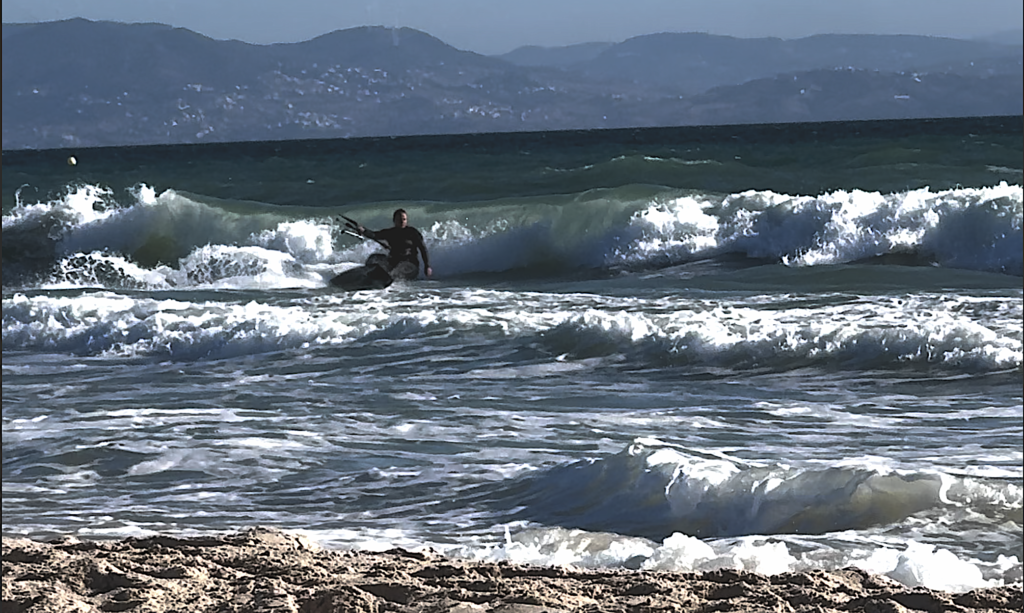
The most common concern for future kitesurfing students coming to us in Tarifa is facing the deep waters of the Atlantic Ocean. I’ve heard these questions many times: "How far out is it shallow?", "Is there a lagoon here?", "Did you really teach someone to ride in water this deep?", "But the kite is going to pull me!", "What if I lose my board?" And so on, and so forth ;)
Your questions and concerns inspired me to share my experiences and thoughts on training in deep water.
Learning kitesurfing in deep water — a hurdle, or an ocean of possibilities?
1. The Lagoon — Pros and Cons! ;)
Shallow lagoons are, of course, great places to learn — I learned and taught a lot in them myself. However, the longer I work on the deep, open ocean (first the Indian, then the Atlantic), the more I appreciate the honesty and opportunities it provides. A lagoon forgives many mistakes, and certain situations simply cannot be practiced there (e.g., proper body dragging or riding in waves). This can create an illusion of progress; the mistakes the lagoon "forgave" will eventually surface and can cause significant stress in critical, unavoidable situations. Additionally, despite appearances, shallow water is often more dangerous — any fall carries the risk of hitting the hard bottom, which can lead to bruises, tears, dislocations, or even fractures. This applies to both beginners and later stages, such as jumping.
2. It’s not the ground, but the kite that is your support
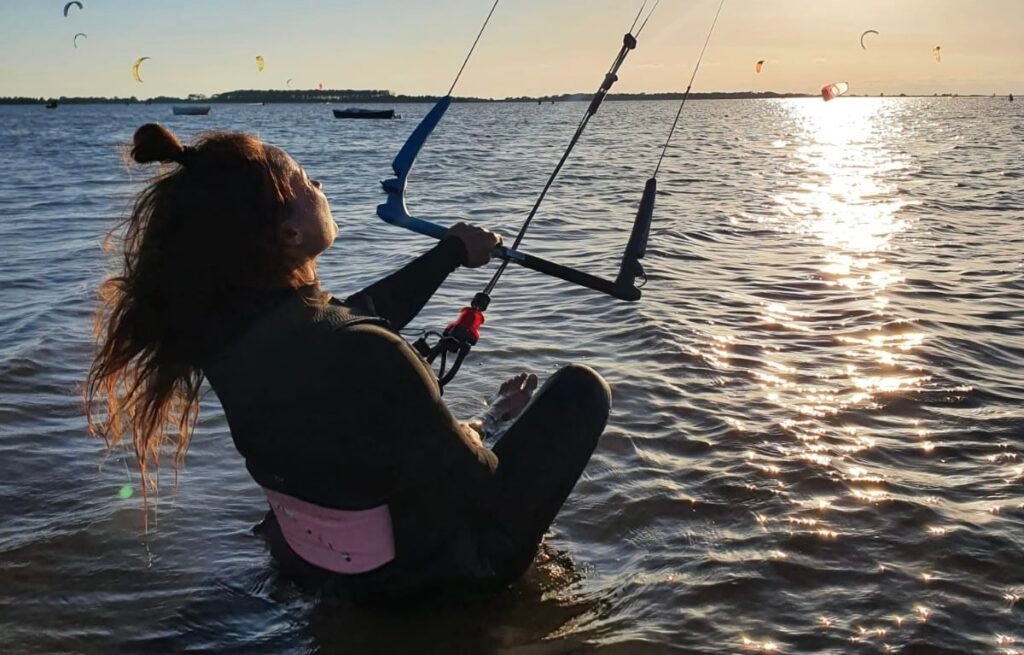
From the very first lesson, we build a relationship with the kite. It is the medium between us and the wind — our driving force. From the moment you first clip the kite into your harness, we teach you trust, communication, feel, and understanding. The foundation of good kite contact is finding the balance between your body weight (gravity pulling you down) and the wind’s power (aerodynamics pulling you up). By developing a feel for the gear and becoming mindful of the wind’s variability, you build a sense of calm, comfort, connection, and safety.
Tarifa boasts wide beaches where we have unlimited space to practice kite control on land. Before you even step into the ocean, we will spend as much time as you need to understand and trust your kite. We focus on all the details that lead to fully conscious steering, giving you that sense of "support" from the kite. We always select training equipment that doesn't generate excessive power but allows you to explore the wind window and the mechanics of the kite and bar.
These beach exercises also give you the freedom to move with the kite on land — something that is often a struggle for people who have only ever hooked into a kite while in the water. In Tarifa, we have plenty of room to walk with the kite and learn to launch and land independently.
3. Body Drags — Your "legs" in deep water
Once you feel a connection with the kite, it’s time to jump into the water. Mastering body drags gives you the ability to move in any direction without a board! You can drag yourself back to shore, tack upwind, recover a lost board, or get past waves near the shore. When body dragging, contact with the ground is unnecessary — in fact, it gets in the way.
Calm and controlled body dragging is another element that provides a sense of control and safety in any situation. Yes, the kite will pull you, but exactly where and with as much power as you communicate to it through the bar and your body position.
You’ll soon realize that body dragging is much easier and more pleasant than trying to walk through the water with a kite. It’s like trying to walk while carrying a boat instead of just sitting in it and sailing ;P
Remember: if you are afraid of deep water, the first exercises take place close to the shore. As your comfort grows, we increase the distance, overcoming barriers step by step so naturally you won't even notice.
4. Buoyancy — Naturally staying afloat
Remember that several factors help us stay on the surface (which I assume is the biggest fear regarding the deep ocean).
First, our bodies have natural buoyancy. Second — the wetsuit, third — the harness, fourth — the kite, and on top of that, you always wear a 50 N buoyancy aid during lessons. It would take a massive Kraken to pull you under despite all that! :D
5. On the water, you are not alone — We’ve got your back!
Even though your instructor stays on the beach, they are in constant radio contact with you via your helmet. They give you real-time tips, keep an eye on you non-stop, and give you 100% of their attention. Because they cannot physically do the work for you, you learn to handle every situation yourself (guided by their voice), which leads to faster learning and better retention. You gain confidence and "water smarts."
In addition to the instructor, there are rescue boats on patrol, ready to safely pick you up and bring you and your gear back to shore if needed. This is all included in the price of your course.
6. The ocean doesn’t forgive mistakes, so we teach you not to make them!
Experienced instructors who catch every detail, a massive emphasis on safety, the ability to predict risky situations, and developing mindfulness of changing conditions — these are the elements that make your training highly effective, fast, and clear.
Our students progress quickly because we focus on the details from day one. It’s not a matter of time, but of quality.
The ocean is unlimited space, contact with nature, safety, and authenticity. Don’t deny yourself the chance to learn from its wisdom. I don’t know anyone who ever regretted JUMPING INTO THE DEEP END. Literally and figuratively ;)
Kasia:
"...After learning on the Peninsula, meeting the ocean was a huge challenge! Those waves are impressive! But step by step, everything was clearly explained — how to master the elements. Lots of valuable advice, plenty of smiles, and a great atmosphere!..."
Pascal:
"...I started as a complete beginner and managed to have my first water start within 5 hours of teaching. Loved it and am definitely coming back there!"
Agnieszka & Iga:
"...Even though Tarifa can be associated with big waves and difficulty learning, the classes 'disenchanted' the waves and the kite. We believed again that we can ride independently even at a more challenging spot!..."
Iris:
"...really precise teaching advice, which made rough conditions of Tarifa feel safe for me. Keeping me hungry for more... So — heavily recommended!!"