Time to reconnect!
  +34 603 518 875
  booking@lostelementos.com
Rel’Ocean – A Relationship with the Ocean*

[(neol.) – from Eng. relationship /rɪˈleɪ.ʃən.ʃɪp/ – “relacja, związek” + Eng. ocean /ˈoʊ.ʃən/ – “ocean”]
Living, kiting, and working by the Atlantic Ocean in Tarifa opened up an entirely new way of seeing both kitesurfing and life. Running the Lost Elementos school, I meet countless people who, often for the very first time, come face to face with the raw, unlimited force of the ocean — and I want to share the reflections and lessons I’ve gathered from observing Mother Nature and how closely her rhythms mirror the human soul.
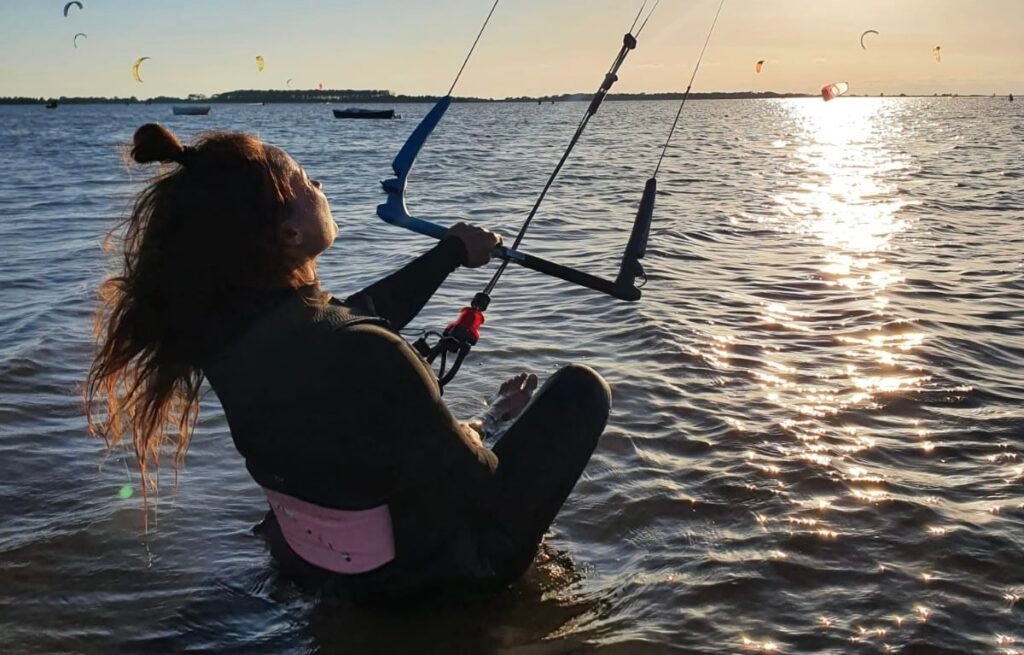
Most of us took our first baby steps (or rather, our first tacks) on shallow, peaceful waters — at Pucific (Pucka Bay — a popular Polish kite spot) or other calm lagoons. We all adore the pristine flat. You go out, you have solid “ground” under your board, and you can focus entirely on yourself and your progress.
But then comes the day when a friend convinces you to ride in the sea… or your partner books a dreamy kite trip to Tarifa, Fuerteventura, or Cape Town.
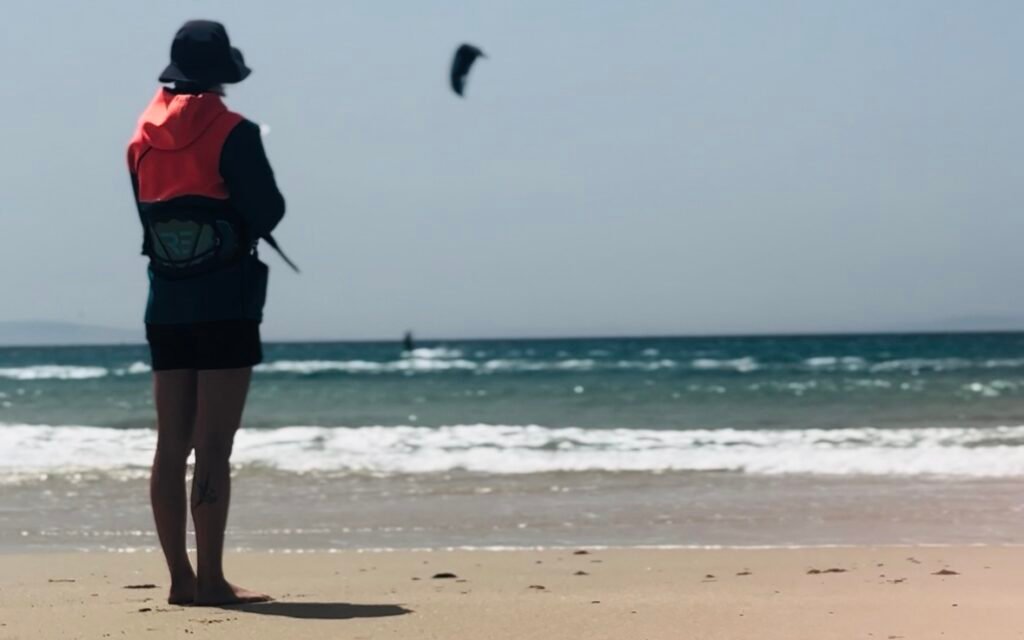
It’s perfect: sandy beach, endless blue horizon, you pump your kite, connect your lines, and head out.
And then you feel something new. THIS WATER IS ALIVE.
You must face the shorebreak, punch through breaking waves, and stay hyper-aware so you don’t get tumbled. There are sucky currents and tides. You drink half the ocean through your nose and wonder how you ever thought you “knew” how to kite.
In one “word”: WASH–SPIN–TUMBLE.
No matter your level — whether you're doing your first body drags or already throwing tricks — the first encounter with the ocean always humbles you.
So why do it? Why choose the ocean when we could happily stick to smooth lagoons and enjoy effortless cruising?
I asked myself that too — until I noticed something extraordinary.
Let’s dive in.
LEVEL –1: Your relationship with the ocean mirrors your relationship with another person
Most of us, at some point, experience the comfort of having our own space: full autonomy, free decisions, independence, unrestrained freedom. In such periods we easily build routines and habits; we have time to regulate, reset, create, reflect. We feel in control, balanced, intentional.
That’s exactly how flatwater riding feels.
But then the day comes when someone enters our life — a partner, a friend, a parent — and suddenly our rituals, routines, and ways of doing things get challenged by the dynamic of that relationship.
We discover that our sense of control was an illusion, and our “balance” existed only because the ground beneath us wasn’t moving.
Riding in the ocean is a masterclass in being in relationship.
- It’s learning to function inside a variable.
- To respect another force.
- To accept the oscillation — of both the water and the emotions.
Despite the shifting conditions: staying true to yourself and holding the strength to act on your ideas.
Despite the difficulty: expressing yourself on the waves and overcoming the paralysis that comes with too many variables and too much unpredictability — both in the ocean and in relationships.
It’s learning to work with a living, often unpredictable organism.
Let’s go deeper.
LEVEL –2: Your relationship with others reflects your relationship with yourself
Riding on perfectly flat water is like looking at your reflection — a two-dimensional image of who you are. But we are multidimensional beings, and what we see in the flat-water “mirror” (or a bathroom mirror) is not the full picture of our depth.
To truly know ourselves, we need a multidimensional mirror — which, in life, is found in relationships.
It is in relationship that we notice:
- What irritates us in others is often what we haven’t yet integrated in ourselves.
- How we react to someone else’s dynamic reveals the areas we still need to work on.
This awareness leads us to a simple conclusion — and the answer to the question:
“Why ride in the ocean?”
LEVEL –3: Your relationship with the ocean is your relationship with yourself
Facing the ocean unlocks access to a multidimensional image of who you are.
- If you fear the depth of the ocean, you’re really afraid of looking into your own depth.
- Ocean riding teaches acceptance, respect, awareness, and communication — with the ocean, and with your inner self.
- It’s the art of keeping a calm mind and steady breath while experiencing unity and synchrony with nature — regardless of her mood.
- It’s learning to embrace the full spectrum of your emotions, your inner waves.
- It’s giving yourself permission to ride the wave that scares you (even if it doesn’t end perfectly).
COMING BACK TO THE SURFACE
Adding wave riding to your kitesurfing diet doesn’t mean abandoning your “laboratory” flat spots. Every relationship needs room to just be with yourself — not every experience has to dive into philosophical depths.
The ocean isn’t a force to conquer.
It’s a space to understand.
And whenever you ride through it, you’re always riding toward yourself.
(neol.) – from Eng. relation /rɪˈleɪ.ʃən/ – “relationship” + Eng. ocean /ˈoʊ.ʃən/ – “ocean”) — a neologism describing the complex, dynamic, and often unpredictable nature of human relationships — including the relationship with oneself. The term highlights the analogy between emotional variability, unseen depths of the psyche, and the force and capriciousness of the oceanic element.
Symbolically, Rel’ocean encompasses both harmony and flow (closeness, mutual understanding) as well as turbulence and disorientation (emotional “storms,” unpredictable reactions of another person, or one’s own internal tension). It suggests that every relationship is a space of shifting currents and depths that can never be fully known — requiring awareness, flexibility, and readiness for change.